“Luck is a fine line between survival and disaster, and not many people can keep their balance on it”
Hunter Thompson
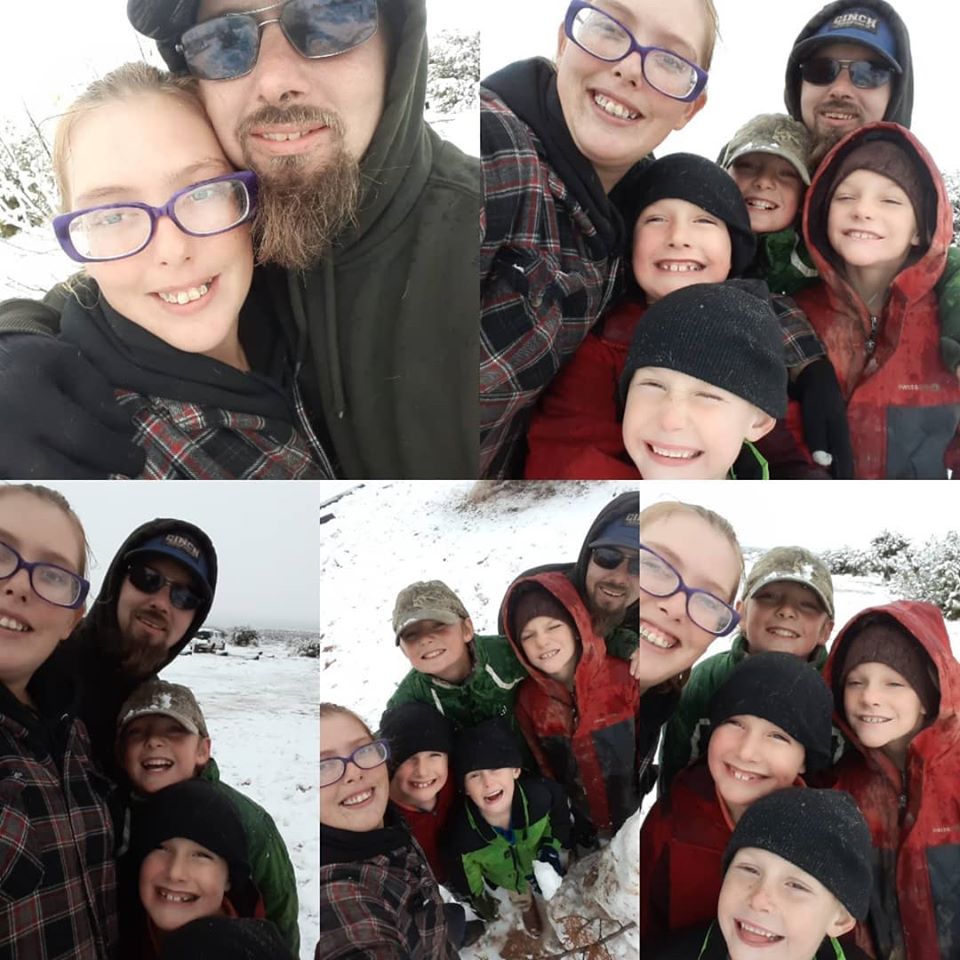
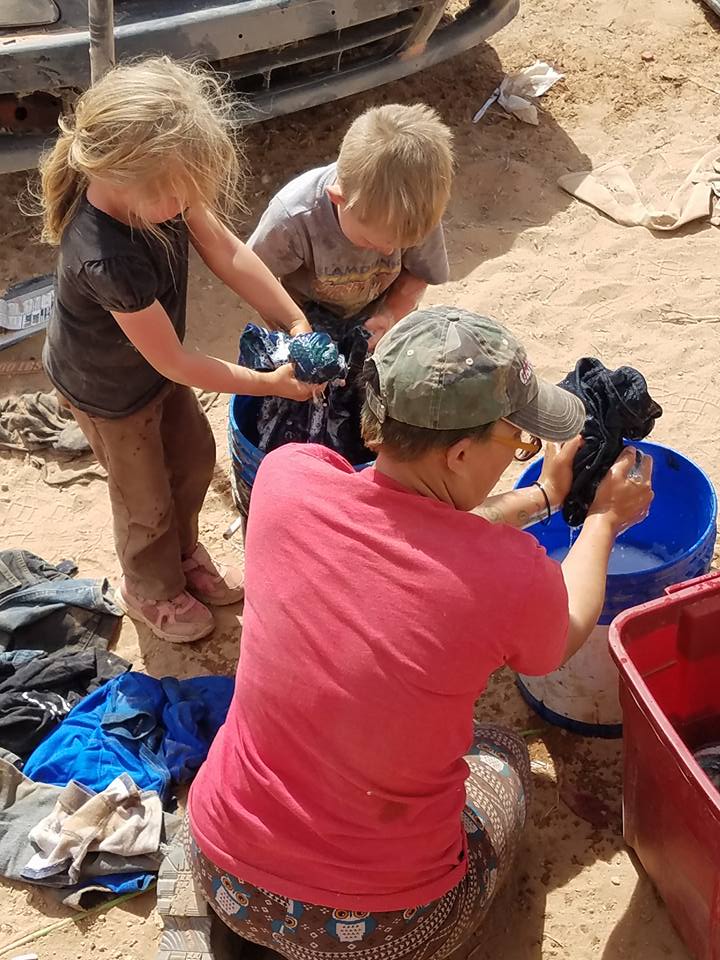
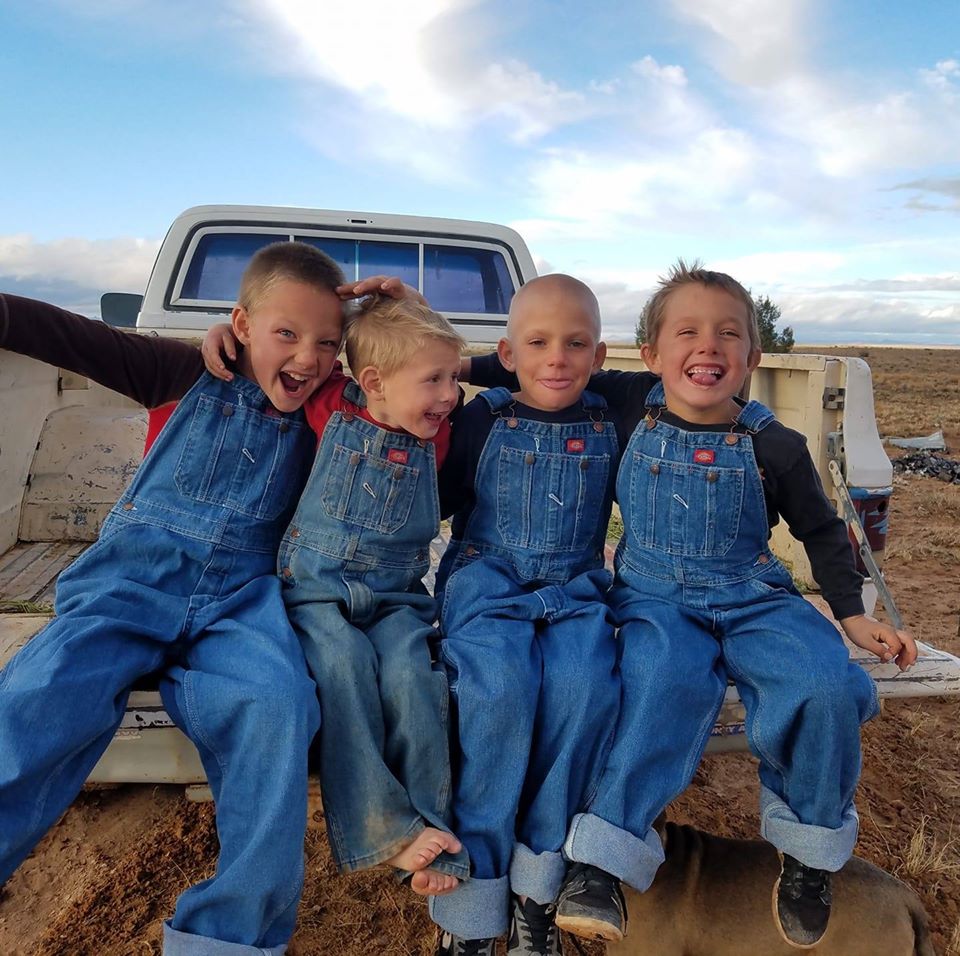
Happy Thanksgiving from The Rockin Boondox Ranch, Phillip, the four boys, Bry 10, Buba 12, E-Man 8, Logi 5 and myself Jessie live in Arizona on a 40-acre ranch called The Rockin Boondox Ranch where we invite you to join us on our journey. Intro We started small almost two years ago on another 40-acre ranch with just a trailer, a generator, and a couple of dogs. We soon lucked into a 3-bedroom manufactured home down the road with solar and wind power or so we thought. We shortly learned all the electric was bad, so we went back to the generator. We had a few ups and downs in the first years. Hastily we bought chickens, ducks and pigs to rapidly find out we were in way over our heads. We lost most of our livestock in the first few months. This taught us a lesson “slow and steady wins the race”. Now we are starting from scratch. We still have our home and in the last year have been able to rescue a couple of horses, chickens and some breeder rabbits. Our solar is now running which allows Phillip to have a few of the comforts of town like tv and lights and I can’t bitch because we cut our costs by $400 a month. I hope to be able to have enough of a battery bank here soon that I can also use our washer and dryer. While I have no major issue with hand washing clothes it can become tedious with how many boys we have. Our next step is to rebuild pins, drill a well and slowly introduce more animals to the ranch. This coming summer I hope to have our first garden built and ready to grow and over the next five years, open a rescue for dogs and horses, learn the ways of the land and become self-sufficient. So please join us on the adventure at The Rockin Boondox Ranch.
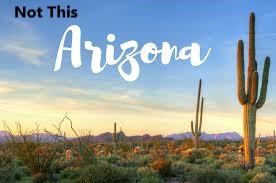
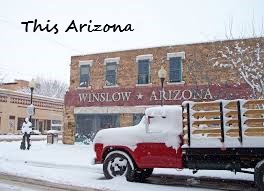
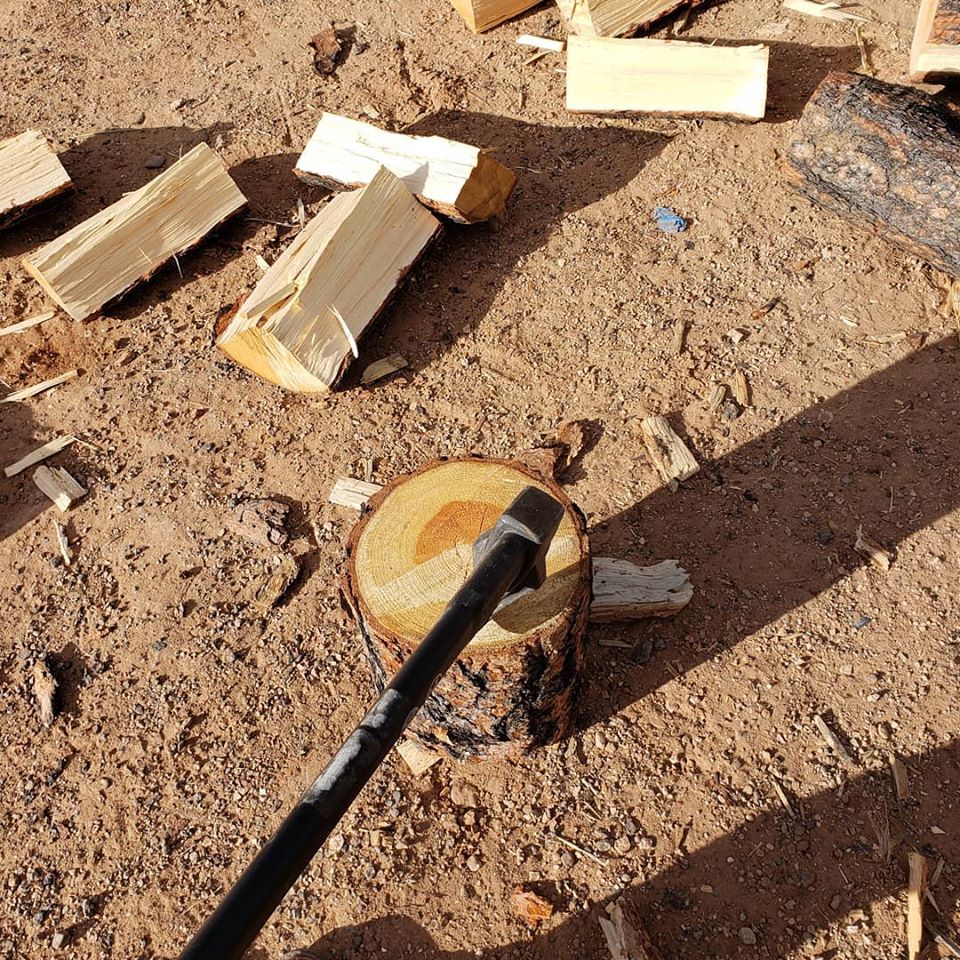
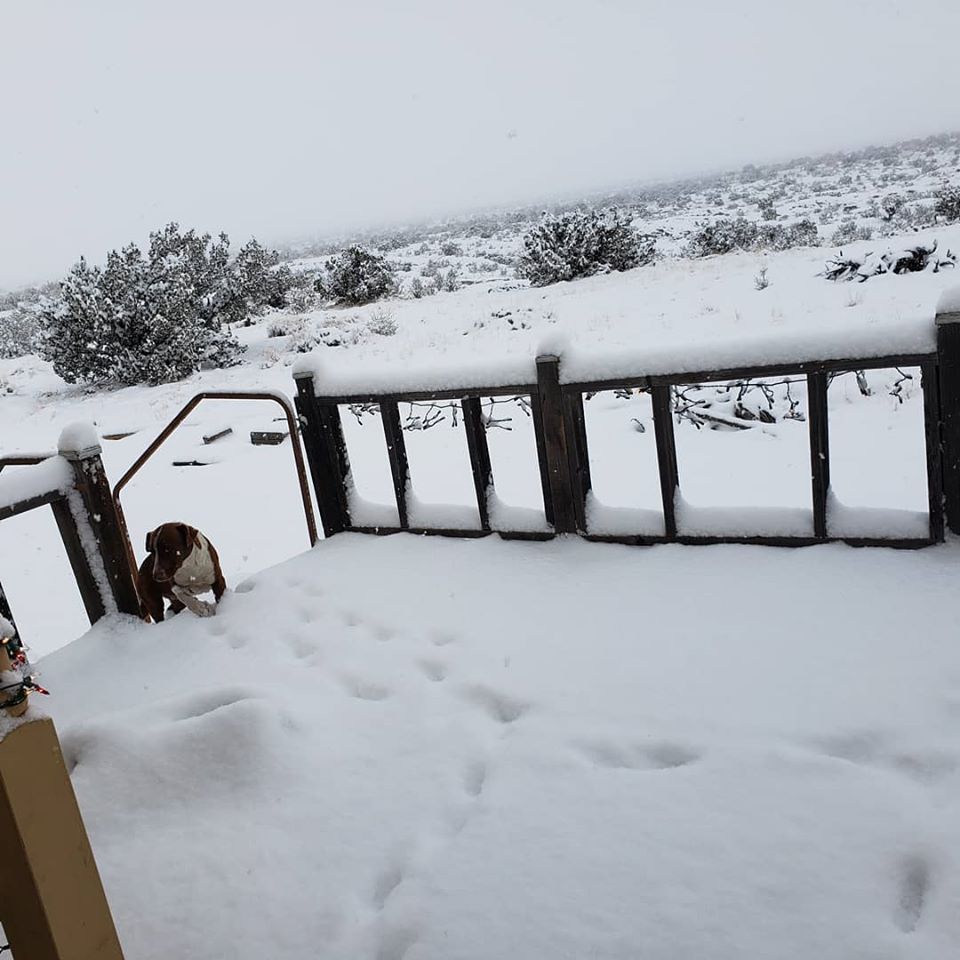
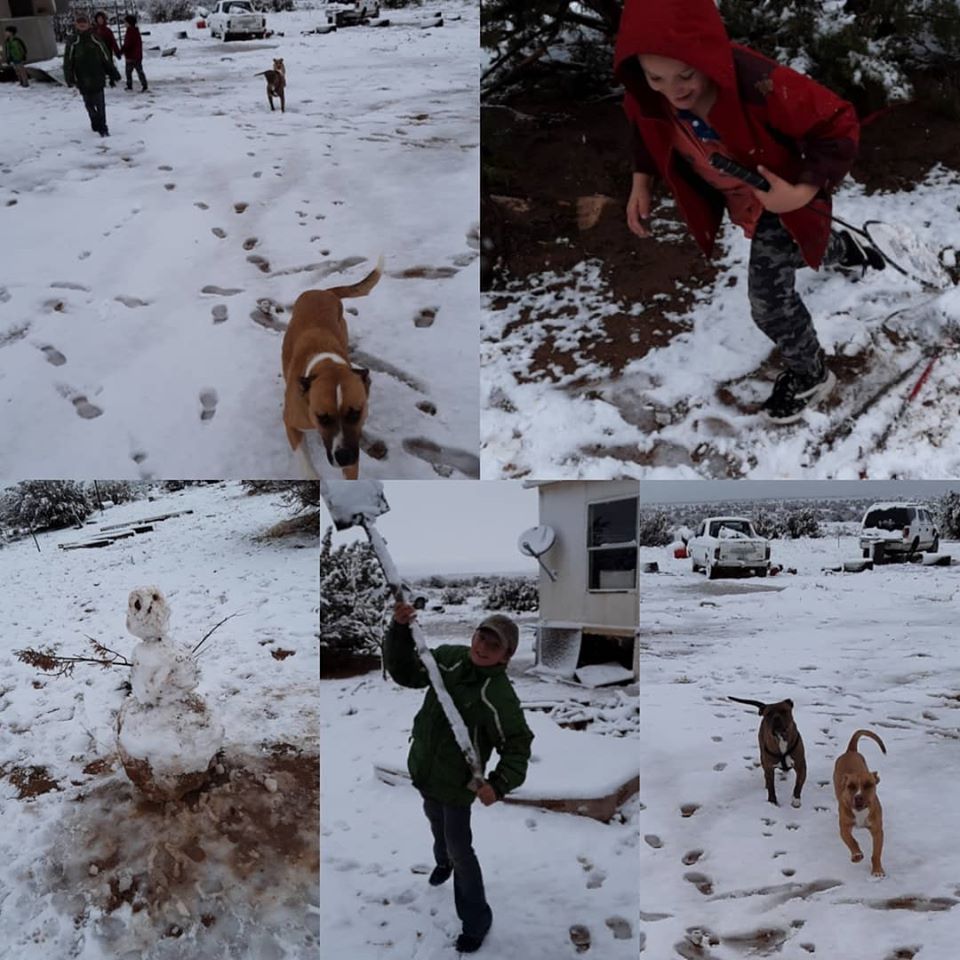
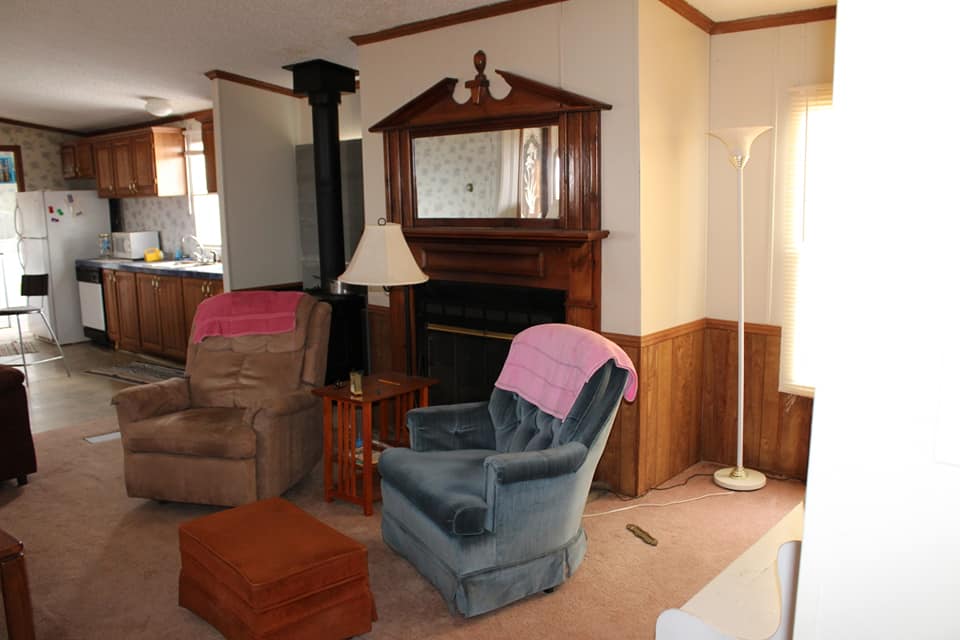
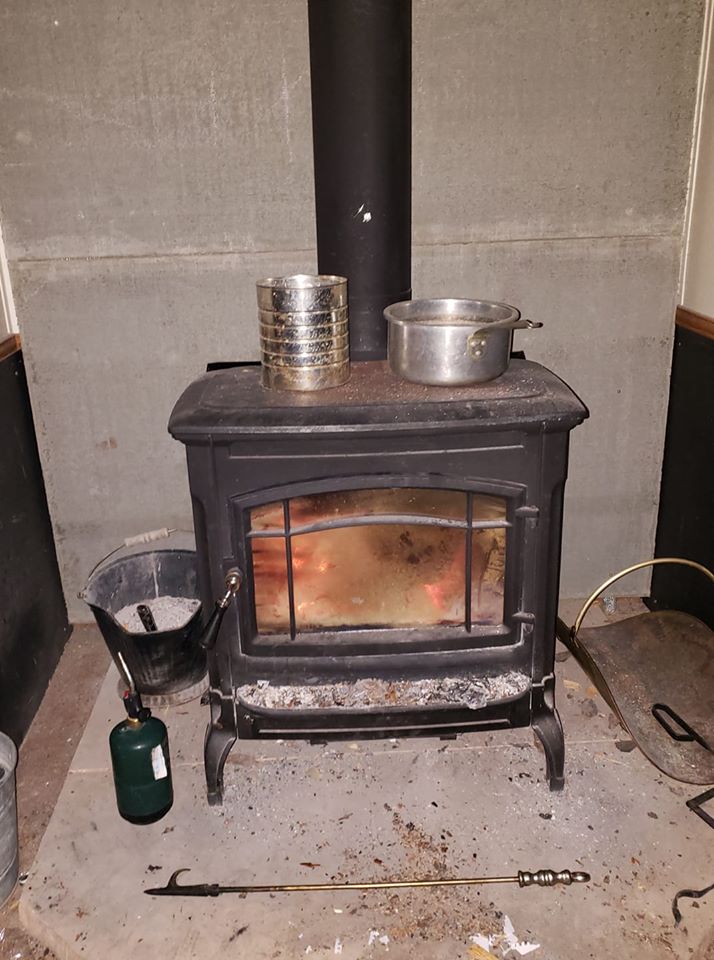
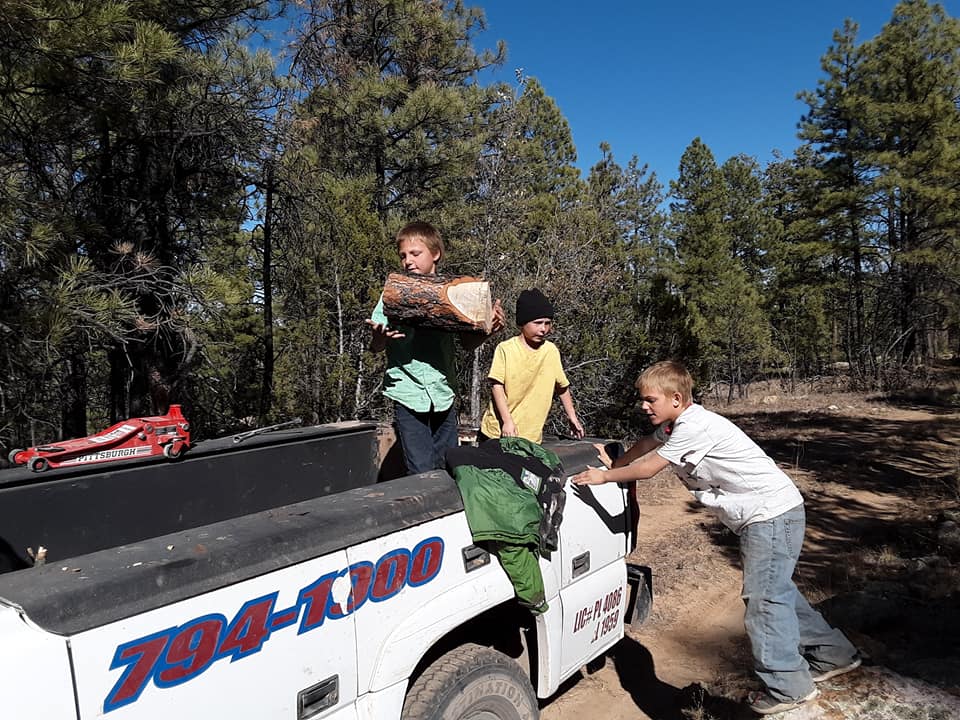
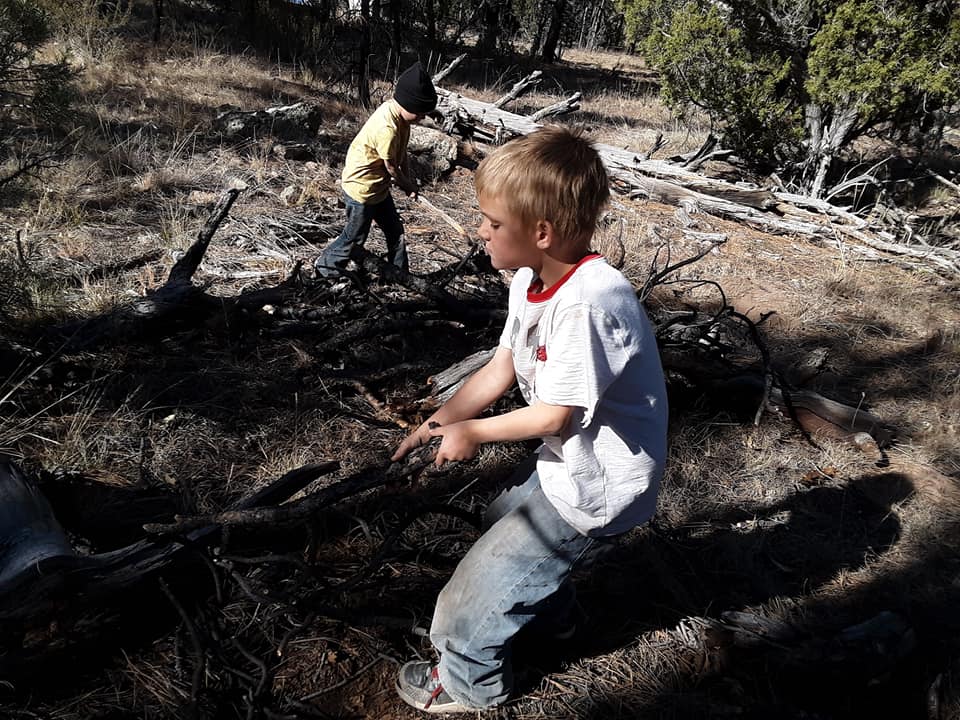
Our ranch is located off a remote canyon in Northern Arizona, the high desert. Yes, we have cactus. Yes, our tempters reach 105 degrees in mid-summer. Do we get cold? Yes. Do we have snow? Also, yes. And your off-grid? Most importantly, yes. Baby its cold outside, and what do we do on the ranch to be ready for winters in Northern Arizona? We spend most of our summer weekends out camping, spending family time and woodcutting. This was a family tradition back when I was a kid. Now we involve our four boys who love the outdoors and finding cool, unique stuff out in the forests and working hard to stay warm for the winter In Arizona, we have six national forests, and we live in the Apache-Sitgreaves national forest in which has more lakes and rivers than any forest in the southwest united states. It is home to many spices of plants and trees including Ponderosa pine, quaking aspen, fir, and spruce trees. We also have Pinyon and two types of Juniper shaggy bark and alligator. Our family is taught to recognize the different species for many reasons. First of when you purchase a wood permit you need to know what you are allowed to cut. If a tree is dead, no green you can cut it, to a point. Alligator juniper and oak trees need a special permit to be cut and very few permits are sold only during certain times of the year. The reason for this is that oak and alligator juniper are ancient slow-growing trees. Oak trees are also endangered, and junipers are endangered in some areas. While oak and alligator juniper grow slow and hot it is hardwood and hard to cut. For the most part, our family uses pine, shaggy bark juniper and aspen. Both shaggy bark and aspen are clean hot burning wood. While pine is a quick-burning and dirty wood; meaning you may have to your fireplace fluke more often. Other reasons to know the differences between species include medicinal uses and cooking uses. For cooking different woods bring a different flavor to your food. Medicinally juniper berry is great for yeast infection and an internal cleanser. Just like any house in the suburbs, we do have a furnace, but in truth, I’m not sure if it even works. We have never used it. We have two fireplaces to heat our home. One the true fireplace with hearth; is used more for ambiance and sometimes to cook on when it is too cold to cook outside, but we don’t want to use the oven. Then we have the wood stove, which can heat 1500 square feet. Unfortunately, our house is larger than that 1500 sq. ft. To stay warm Phil and I spend our winters in the living room or guest room in the main part of our home, and to allow movement of air to heat the kid’s rooms the doors are cut in half. On average we use six quards of wood per year on the ranch. The wood is used for heating, bonfires, and cooking. After winter has ended in Northern Arizona, we on the ranch start all over with preparing for the next year. Summer months are for checking for leaks, wholes in the stovepipe, and cleaning the fluke. Thankfully both Phil and I have worked with stoves for a long time, so we are able to save money and do most of the upkeep our self’s but on occasion, we have had to call the local stove dealer for inspection. So, while it may be cold outside, we stay nice and cozy throughout the year.
“Courage is being scared to death but saddling up anyway. “
John Wayne
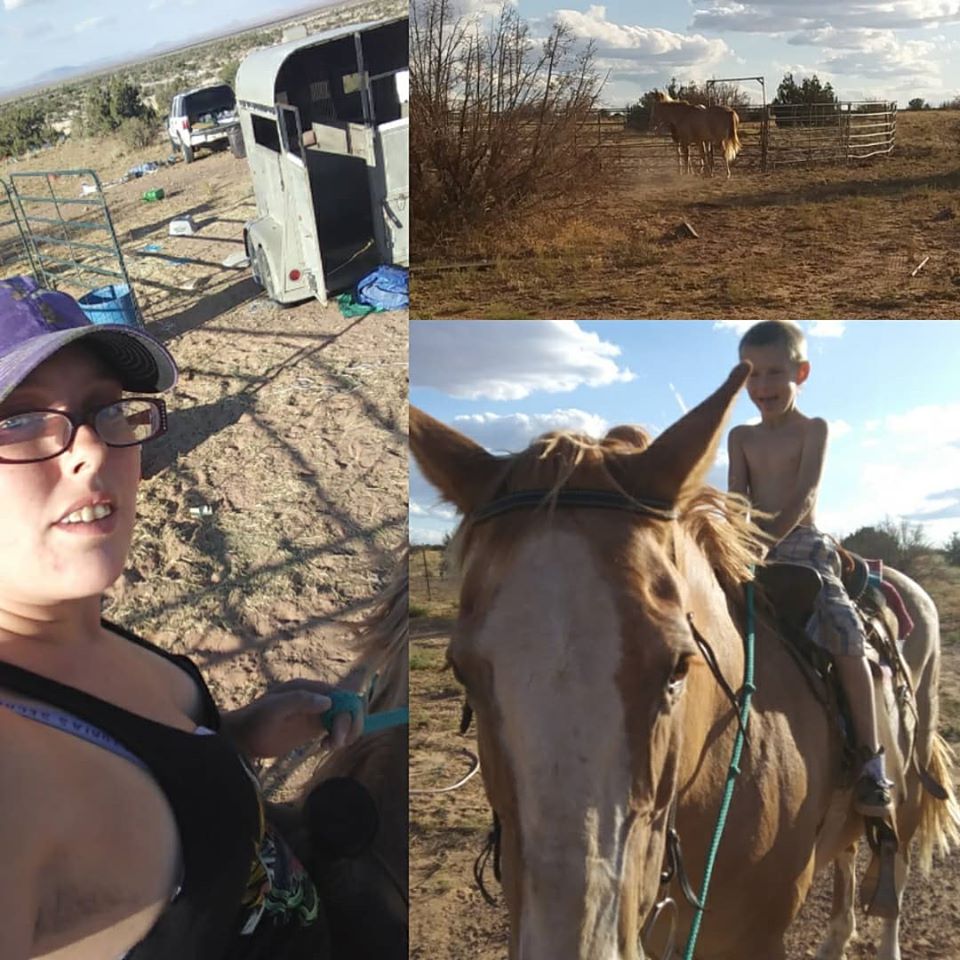
My entire life I dreamed of owning horses. I have learned to ride, train and care for them but never owned my own. I grew up on 2.5 acers and had the room but mom always said, “I’ll own 400+ horses but on 2 wheels not 4 legs”.
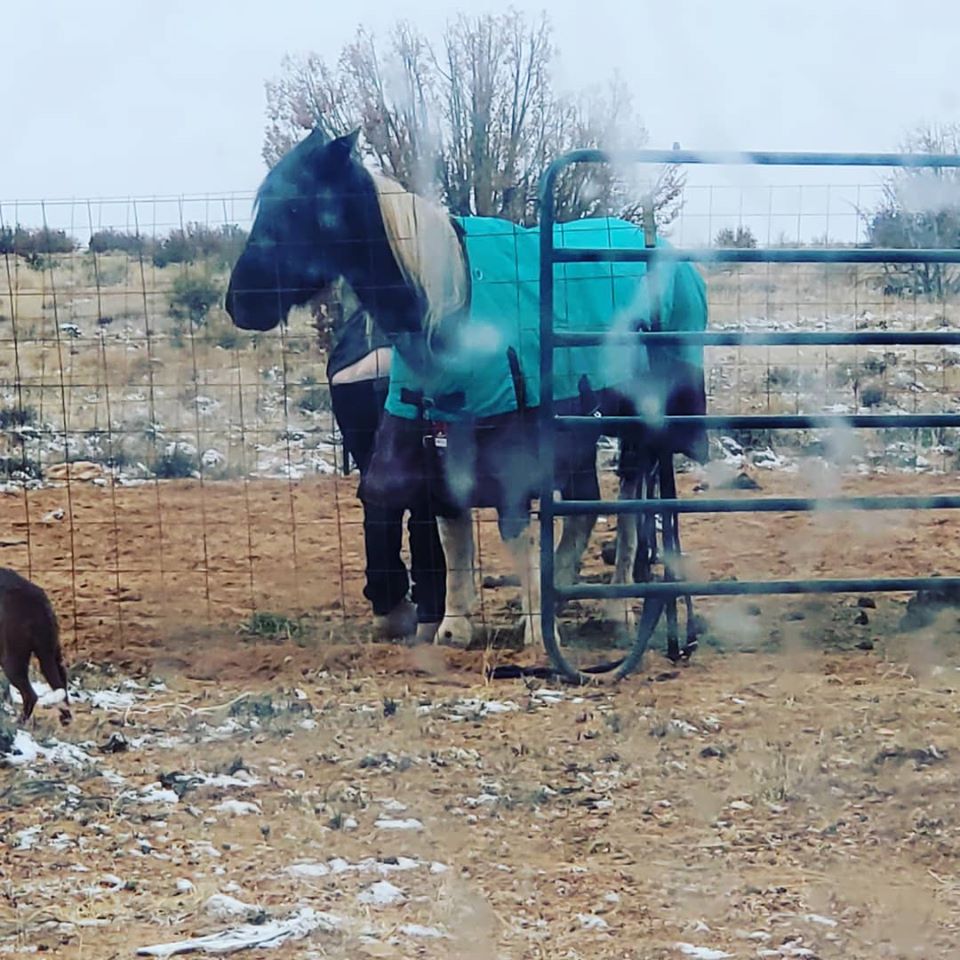
One year ago, today we purchased our first horse, Tł’éé’honaa’éí translation bringer of night in Deni or Navajo. For short and so people could pronounce his name we named him Necho. Necho was an older black and white gelded paint from the Navajo reservation in Northern Arizona. Calm, loving, great with the boys and loved attention Necho was a fantastic first learning experience to owning our own horses.
Unfortunately, we learned the reason Necho had been so cheap to purchase. While well trained at one point in his life he had become barn sower. He refused to ride farther then a few hundred feet from his corral or walk on rock; which was a problem since we live on a canyon and would rather be out in the pasture. Due to the work we eventually wanted our horses to do such as trail ride with the boys, herd cattle, and check fences he was not a good fit for the ranch.
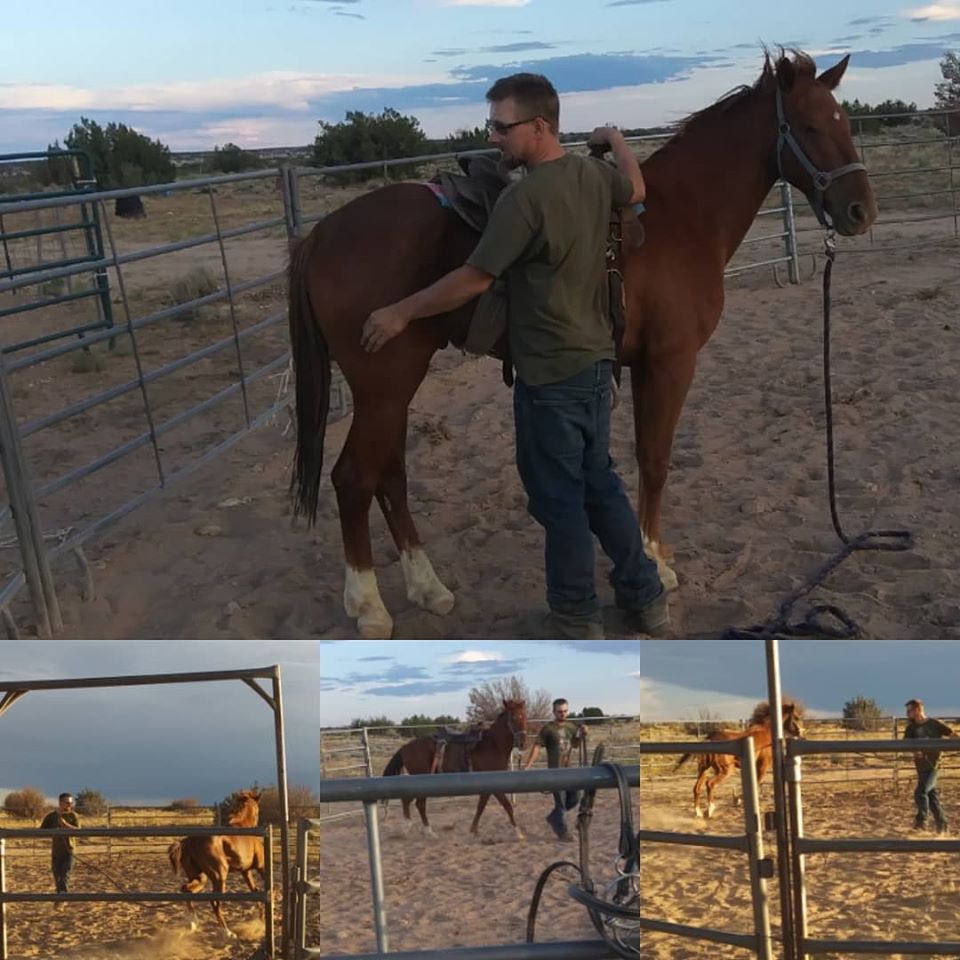
Soon we found him the perfect home and in exchange took on a wild Fish Creek mustang. Red a young gelded quarter horse also a loving yet skittish came to live on the ranch. He is well behaved around the children and dogs, wonderful on a lead rope and well trained with his lunge whip. We are still working with him with saddling and riding and eventually will be the perfect working horse to help on not only our ranch but neighboring ranches around us.
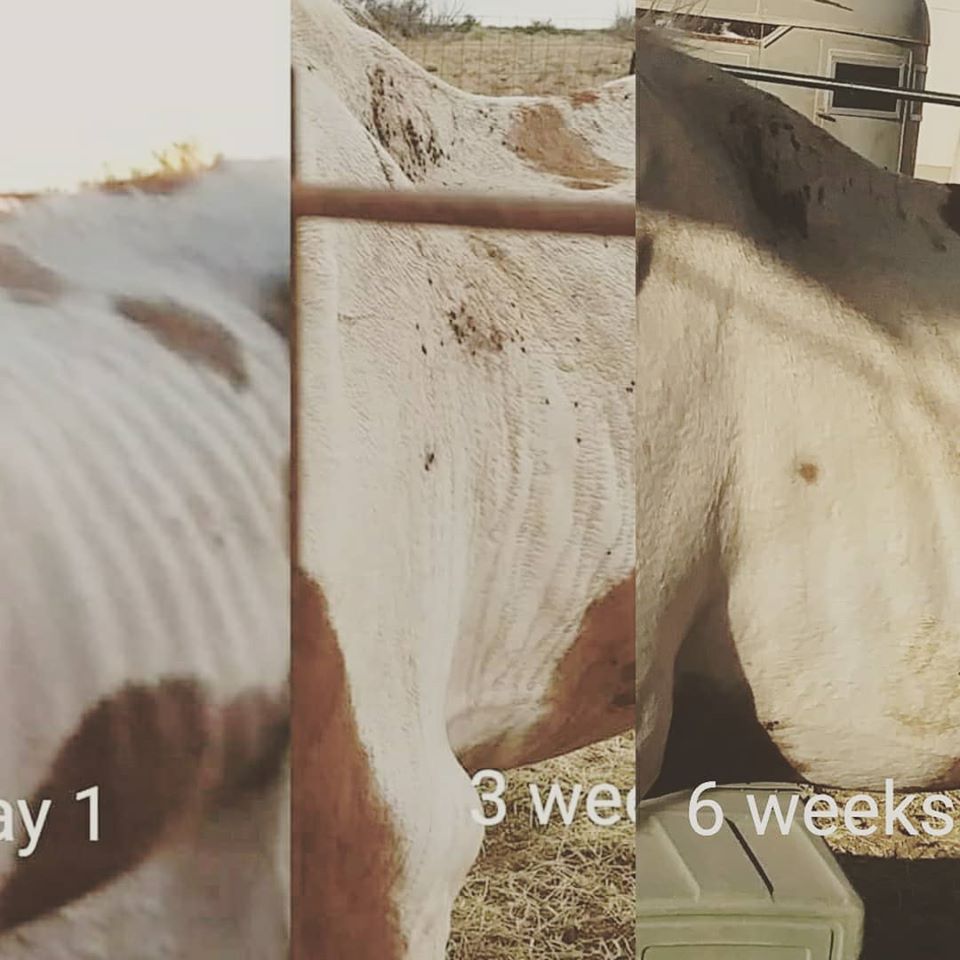
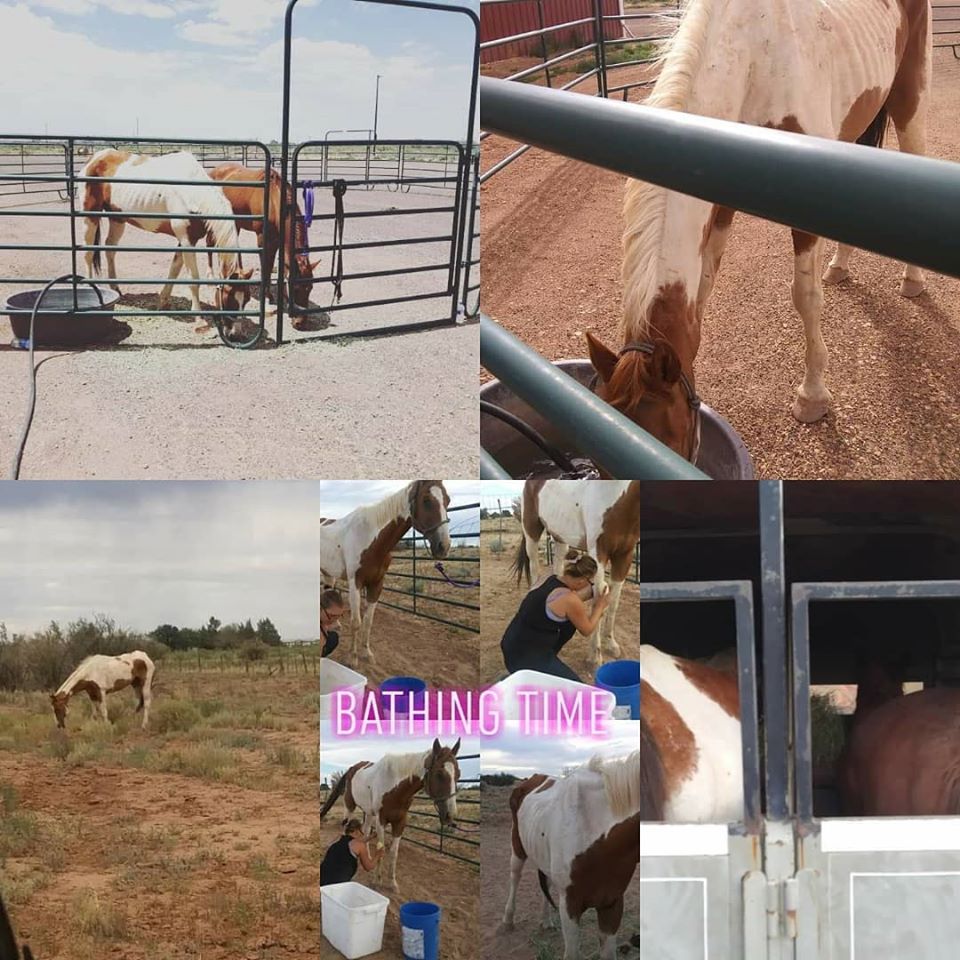
Then in the late spring we received a call about a horse that had been dumped in a local ranches paddock. He was asphyxiated; dehydrated and on the verge of death. With out a second thought Phil loaded up the trailer and we were off to get him. Lucky was a 35+ year old gelded palomino paint. He hadn’t looked to be abused but neglected in his old age.
Luck lived with us as his retirement home for a few months where he felt loved and cared for. For the most part he free roamed the ranch and spent time with his buddy Red. In the time we had lucky we had been surprised he survived the night. He was slowly brought back to health, would walk with the boys as a companion and had the life he deserved. Lucky did eventually pass late one night but we were happy to have him for as long as we did and glad, he was in a loving home when he did go.
Our final addition for now is our spoiled retired ranch horse Charlie. Charly is in his late twenty’s a handsome yet fat and stubborn gelded palomino. Charlie came from one of the largest ranches in Northern Arizona. He spends his now retired days out on the ranch eating, letting the kids ride him and spending time with red.
Our horses are a large part of our life and we will have more as we grow but for now, we love the two boys we have and enjoy their personalities. Red will be visiting a friend’s ranch down south this spring to be trained for a few months and Charlie will live out his day as a cherished companion. My dreams have come true and so much more will over the next many years on the Rockin Boondox Ranch.
Definitions
Gelding – A Castrated (Neutered) male horse
Barn sower – a horse that refuses to leave its coral
Lunge whip – a long whip like device used to whip the ground to direct a horse with commands or directions
Paddock – an enclosed field in which a horse is kept or exercised
Palomino – Horse Breed, a pale gold or tan color
Paint – Horse Breed, light and dark two-toned coloring
Quarter horse – Horse Breed, small, stocky noted for agility and speed. Quarter horses are typically all brown with some variations of black on mane, tail, and socks of their feet
“A drop of water is worth more than a sack of gold to a thirsty man.”
We all have done it. We turn on the water to brush our teeth and leave it on while we go through the steps or we leave the water on while doing dishes. It’s a common waist we are all to blame for and in many cases, you figure it only a few dollars on the bill not that big of a deal right.
In no way am I going to preach politics or saving the world in any of my blogs or I will do my best not to. In this instance may it convert into a world saving thing absolutely, but it is not my point.
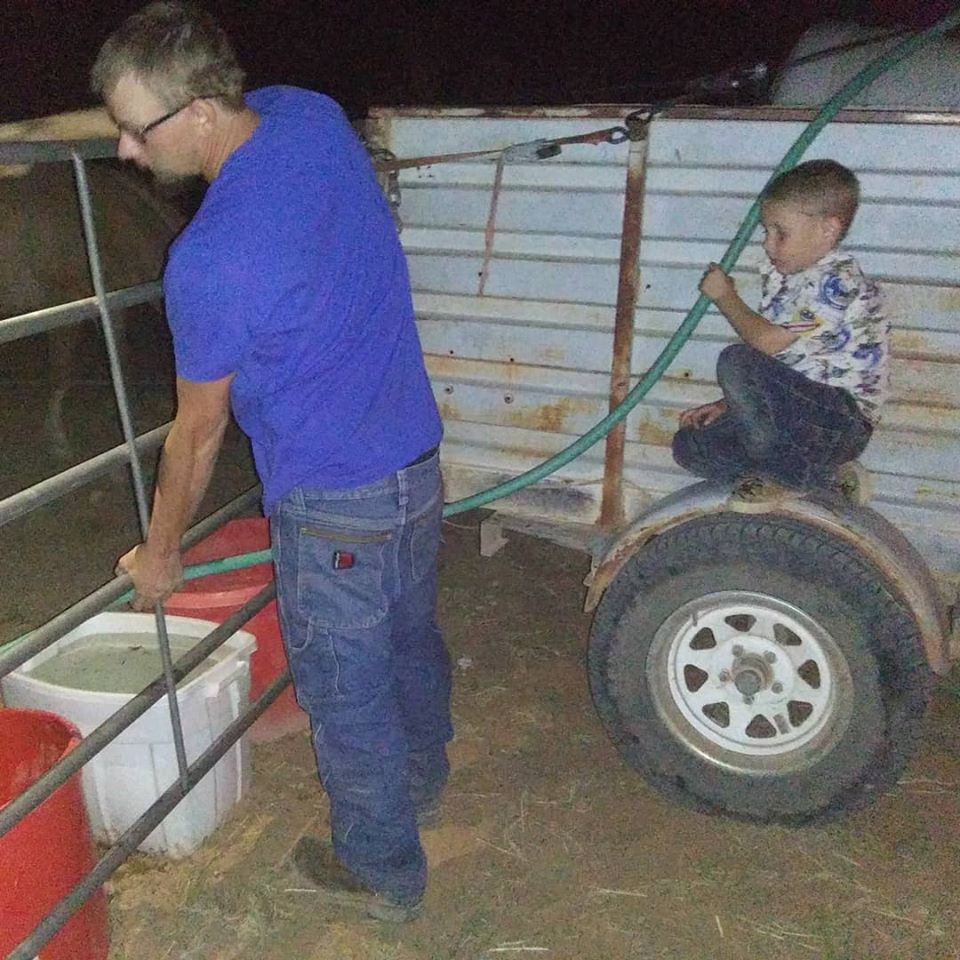
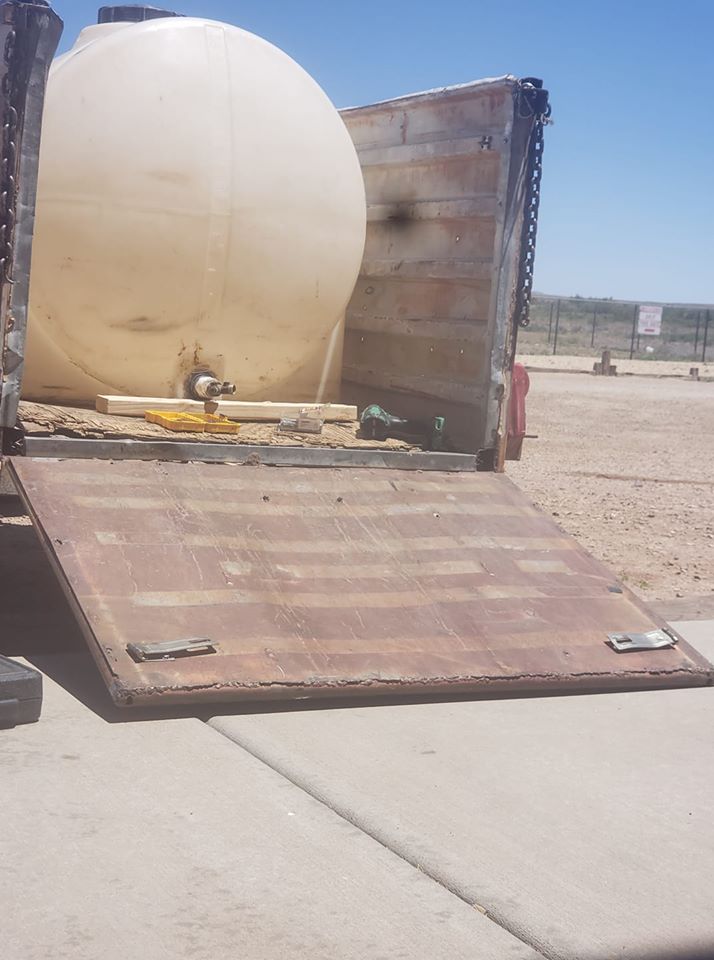
We take so much for granted when things are easy to receive the water you use that comes from the city water supply at the turn of a handle but for us it is so much more. To get water we take our large truck 20 miles into town with a 250-gal water tank, fill the tank for a few dollars and drive it back home.
Did you know? On average a family uses 300 gallons of water a day in the United states. We have 6 people in our home and can honestly say when we lived in town, we used more than that. An average American pays around $3.00 a day for water $90 a month. Like many of you we use $3.00 worth of water but about $15 in gas per load and at the national average we would have needed two loads a day. That’s right around $990 a month…
No one can afford that…ok there are those well-off people out there, but the average American can not afford that. So, we learned to conserve. We washed dishes with a three-bucket system. 2.5 gallons of water in each bucket. Wash, rinse, sanitize. One cap full of bleach for the sanitizer water.
Showers were cut to every other day. By the way this is not bad for you it allows for your natural oils to reproduce. All water used from showers dishes were reused. All but the bleach water could be used for the plans the bleach for cleaning. We researched low pressure water systems and installed them and soon we will be collecting water. On average we now use around 250 gal for about 5 days this of course dose not cover the horses or other livestock, but it was a huge conservation which was a big win for The Rockin Boondox Ranch.
For more information on conserving water check out my links bellow.
Living in town you have so many comforts that you may not even realize. You walk into a room and flip on a light, turn on the water to wash your hands, and turn the knob to your stove to heat the pan you are about to throw the hamburger into. The hamburger you just defrosted in minutes in your microwave. You think nothing of it until your lights flicker out during a dark gloomy storm and your electricity goes out. You fumble around looking for your flashlight if you’re lucky. At last resort, you grab the candle you only use for the ambiance that sits in the dining room and tries to remember where you put that dang lighter you just saw while cleaning a week or so ago. This was our reality for the first year we lived out on the ranches. Of course, we knew where the lighter was, we used it to light the stove, fireplace and the lamps we would light every night before Phill got home to start the generator. Water the greatest thing I remember happening in the early days is when we finally had the water pump going and we had running water from the faucets in our trailer. We no longer had to walk out to grab buckets of water to do dishes, cook, or flush the toilet. That meat you just popped in the microwave. We sat it in the oven so the dogs wouldn’t eat it while it defrosted throughout the day. Then cooked it not always on the stove but when it was warm enough, we learned to cook on the fire pit. This wasn’t extremely new to us we had been camping our entire lives, but we fine-tuned the fire cooking experience. In all honesty, living off-grid was in no way easy we learned to do laundry the right way and the wrong way. We learned to winterize was a little more difficult then we had imagined and staying warm was no cup of tea. We all learned to live again. Our children gained application for the world around them. The greatest part we learned the seclusion was amazing and worth all the learning experiences we would go through over the years to come.
My name is Jessie blink. I am Mother, Rancher, Blogger, homesteader and so much more. A few years ago, my family and I decided to purchase an off-grid property. This was not a decision we made lightly. We did research, checked out a few areas, discussed with family and other homesteaders and finally made the leap. Homesteading and off-grid living is not an easy road and many families do not make it but we have a plan and would like to give you a peek into our everyday life without all the comforts of home out in the high desert of Arizona. I hope not only will I be able to teach but to connect with others like us and learn from each other. To believe we can do this all alone, we would be kidding ourselves.
 The Rockin Boondox Ranch